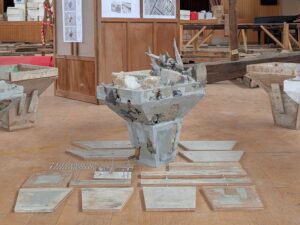
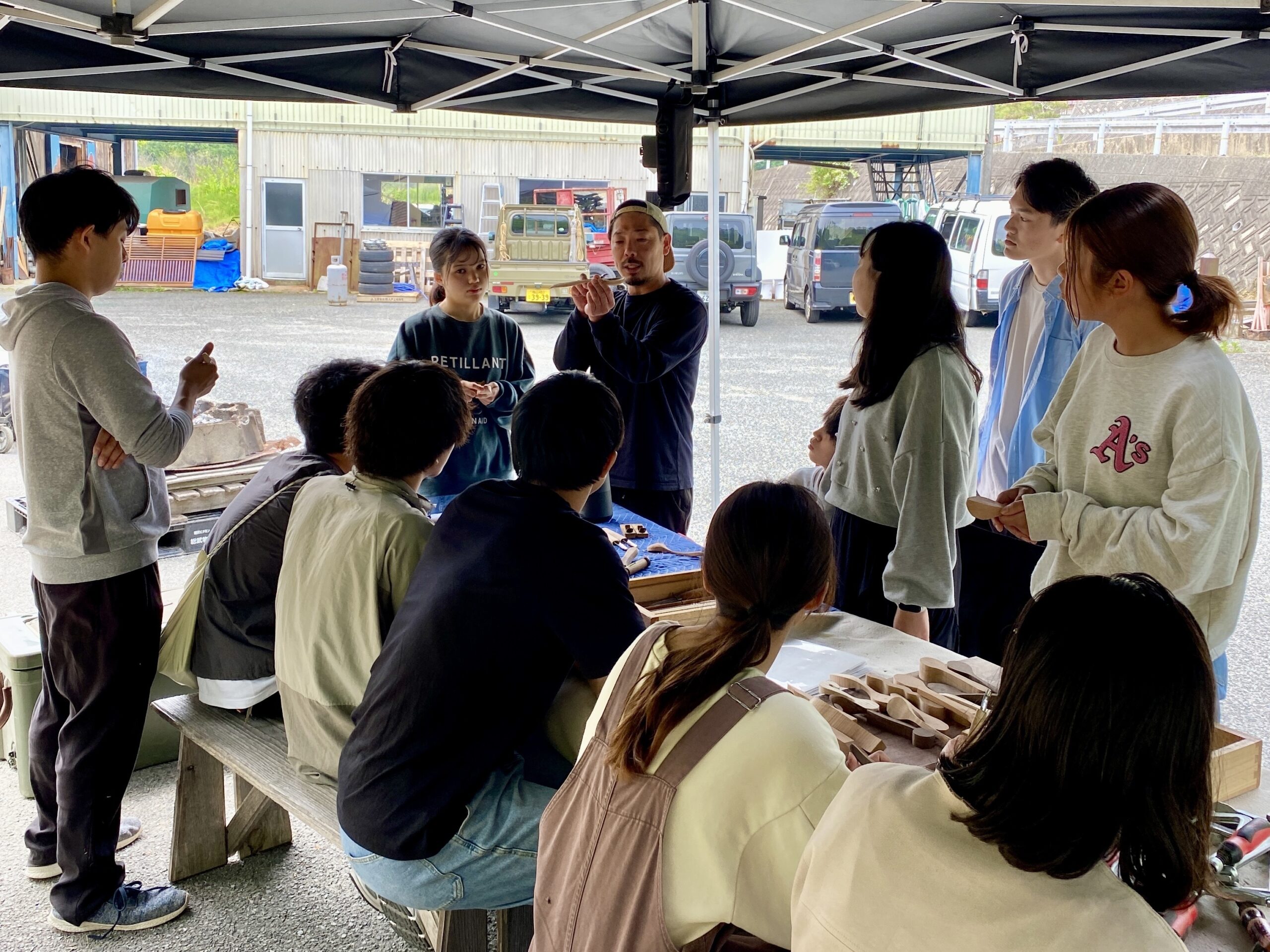
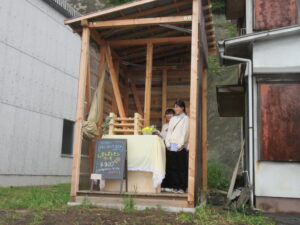
On January 29th, the final session of the “Yanominami Project” was held! For this third and final session, the children completed the pieces they had been working on throughout the earlier classes! Specifically, they hammered in the components while adjusting the overall balance, decorated the plywood base, and attached the letters. The base used a material resembling grass, and the children were thrilled to work with this unusual material. It was impressive to see them decorating with such enjoyment.
For the lettering, they carved the project name “Time and Space’s Annual Rings,” which the children themselves came up with, onto the table leg components. They also attached the letters “YANOMINAMI”! The design turned out incredibly cute, featuring a brilliant idea from an elementary school student: turning the ‘O’ in “YANOMINAMI” into a clock!
The completed work will be installed in the school’s entranceway. We hope it will be cherished not only by the children involved in its creation but also by future students who will enroll here!
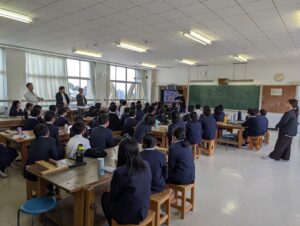
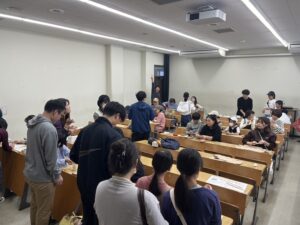
In the latter part of the class, we held a roundtable discussion-style lecture featuring professionals from various fields: university professors, furniture craftsmen, carpenters, designers, architects, filmmakers, and university students.
Through this project, we students also gained much inspiration from the children’s sensibilities and the skills of the professional artisans. This project is a continuous effort spanning three years. While this year’s activities have concluded for now, we look forward to continuing our collaboration with everyone at Yano Minami Elementary School next year and beyond, aiming to build on this success for even better activities.
The second session of the “Yanomi Project,” conducted with Yano Minami Elementary School and Sakura Saku, took place on January 16th. During the first session, we dismantled surplus desks and chairs together with the elementary school students. In the second session, we progressed with creating artwork by securing the dismantled furniture parts to pre-made bases using nails and screws.
This time, approximately 40 elementary students were divided into six groups. Similar to the previous session, they worked in groups focused on dismantling furniture, attaching parts to the base, and designing the letters for the artwork. After some dismantling and securing of parts was completed, it was wonderful to see the students happily enjoying the workshop, each choosing their favorite task!
What started as a simple circular base transformed as the students attached numerous pieces. By the end of the session, it had become an impressive and beautiful piece. It was memorable seeing the students happily using tools they rarely get to handle, like impact drivers and pneumatic nailers, under professional guidance!
Finally, the design team proposed names for the piece, and after a vote by the elementary students, it was named “The Rings of Time and Space”! Production will now continue with the university students and Sakura Saku, with completion planned for the third and final session! We can’t wait to see the finished piece!
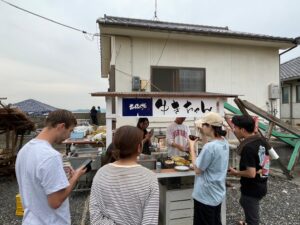
We enjoyed delicious meat and vegetables while spending a lively and fun time together. This time, we also got to use the pizza oven and tried our hand at various dishes like roasted sweet potatoes!
Additionally, the filmmaker who has been supporting the Yano Minami Elementary School project joined us. We had the opportunity to hear fascinating stories not only about furniture but also about the world of filmmaking.
Gathering around the bonfire, we had many conversations. This not only deepened our connections with the people involved in the Yano Minami Elementary School project but also allowed us to thoroughly discuss how to proceed with future projects. It was an extremely fruitful day.
The HUAG (Hiroshima University Architecture Group) course “Architectural Seminar II” offers third-year students an opportunity to experience research-lab activities. In our laboratory, under the theme “Techniques for Planning the Regeneration of Architectural Spaces,” students worked on a project to reinterpret the shopping center inside the Motomachi Apartment Complex in central Hiroshima as a spatial resource and to propose feasible plans for its renewal.
The seminar students assigned to the laboratory visited the Motomachi high-rise apartment complex on Saturday, October 18. They then revisited the apartment complex on Saturday, November 29, where they presented their final revitalization plan proposals, developed in groups, at the rooftop community center. Ideas included “Art Space Formation,” “Motomachi Expo,” and “Community Kitchen + Children’s Cafeteria + Community Café.” The groups demonstrated a clear understanding of the complex’s issues, and some even used generative AI for logo design—showing creativity beyond faculty expectations.
Ms. Itai, who embodies multiple roles including artist, graduate student, resident, and community leader, offered warm and realistic comments on each presentation. Her multifaceted perspective was invaluable.
Afterward, all participants held a small gathering at the okonomiyaki restaurant Soei inside the shopping center. Over food, we reflected on the workshop and discussed future possibilities. The lively conversations and delicious okonomiyaki helped deepen our connections. I myself enjoyed a pork–egg–soba okonomiyaki topped with natto and green onions—so excellent.
On Tuesday, November 18, we held an off-campus workshop at Yasu-higashi Elementary School, where students experienced making their own wooden chopsticks.
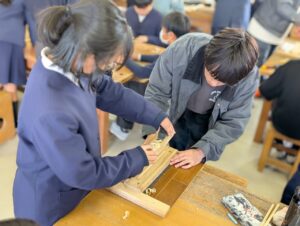
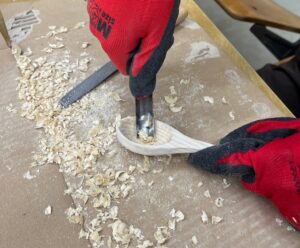
After Mr. Sumikura’s talk on architecture, timber, and the work of carpenters, the sixth-grade students tried using a kanna (hand plane) to shave the wood and craft their chopsticks.
We university students also assisted the children together with members of the construction company, supporting them as they worked hard to handle the hand plane and shape their very own chopsticks.
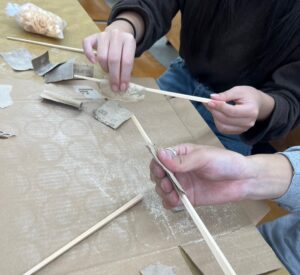
Watching them use the hand plane, smooth the wood with sandpaper, and carefully finish every detail with dedication was truly wonderful and left a lasting impression on us.
We hope that this experience will inspire the children and help broaden their learning and future possibilities.
Graduate students from our laboratory participated in a Japan–China Joint Design Workshop organized by Dalian University of Technology, Dalian Minzu University, and Hiroshima University.
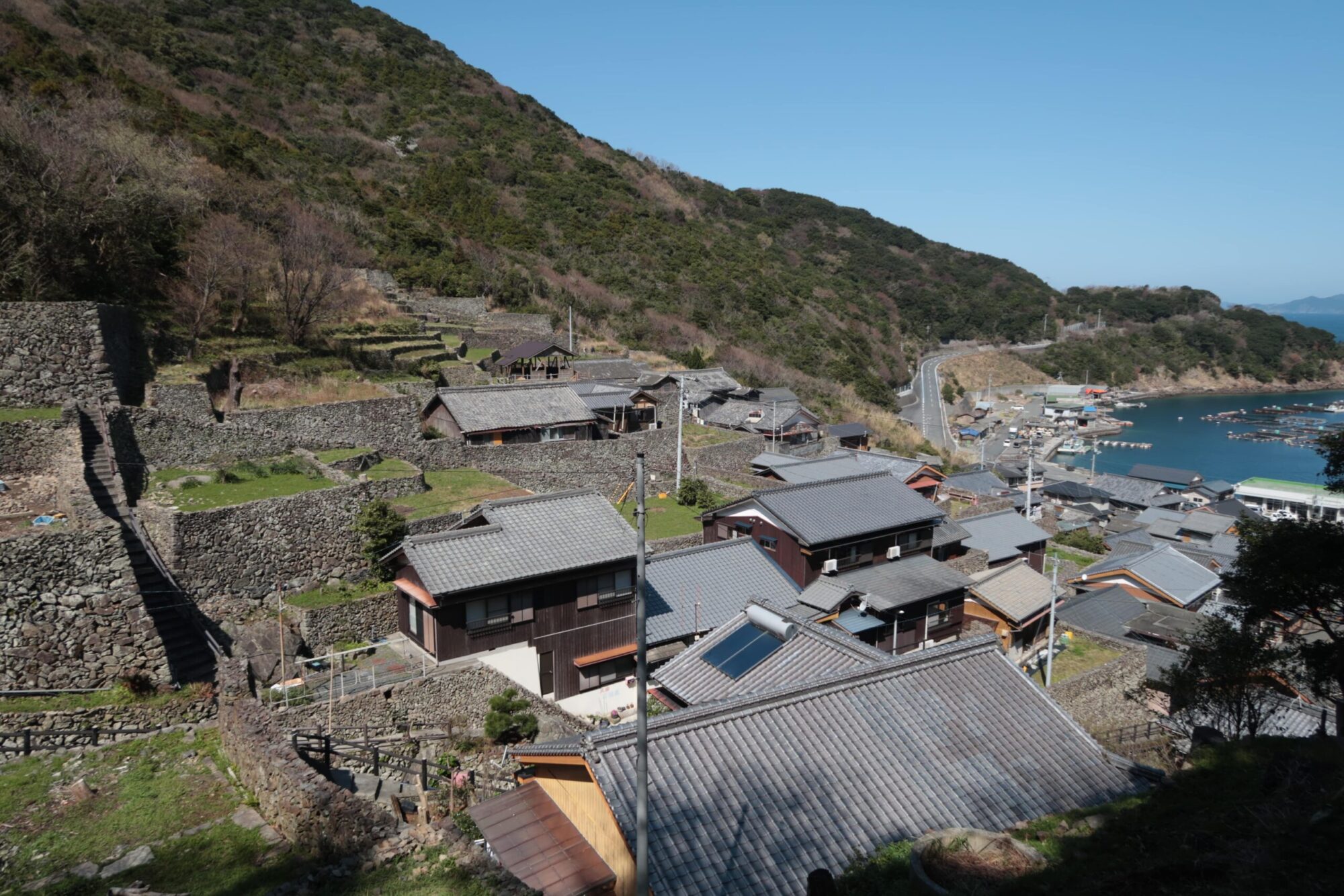
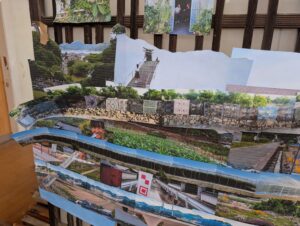
This year’s assignment was to design the preservation and renewal of the houses and residential area in Bunka Street in Dalian, which were developed and supplied by a Japanese company in the first half of the 20th century.
Although the theme was quite challenging, students from both countries worked collaboratively and successfully compiled their results. There were several interesting planning and design proposals, but more importantly, I believe it was a wonderful experience for the students to interact with peers from a neighboring country—thinking together, overcoming differences in language, customs, and culture, and arriving at a shared solution.
We are now friends across neighboring countries, and I sincerely hope they will keep in touch and cultural exchanges in the future.
Starting this fiscal year, we’ve launched a project to upcycle wooden furniture surplus from Yano Minami Elementary School due to declining enrollment, and preparations are steadily progressing!
On November 6th, we actually disassembled wooden desks and chairs at Yano Minami Elementary School to be used for upcycling! After watching a demonstration by Sakura Saku, a furniture shop, four students from our lab attempted to disassemble chairs. It proved more difficult than imagined, and we struggled quite a bit…
Since the project will involve elementary school students and university students working in groups to dismantle the furniture, we students want to train hard to ensure we can dismantle smoothly!!
After dismantling the furniture, we discussed future plans. We were able to talk about the project’s direction and a rough schedule, making it a very productive time.
The HUAG (Hiroshima University Architecture Group) course “Architectural Seminar II” is designed to provide third-year undergraduate students with an opportunity to experience research activities in laboratories. In our laboratory, under the theme “Techniques for Planning the Regeneration of Architectural Spaces,” students are working on a project that treats the shopping center within the Motomachi Apartments in central Hiroshima City as a spatial resource and explores plans and methods for its regeneration.
On October 18, students visited the Motomachi High-Rise Apartments, where Ms. Minako Itai, head of the 6th Core Residents’ Association, guided them and explained the Underground Storage Project she has been promoting. Afterward, students surveyed the shopping center, organized their findings in the rooftop community hall, and shared their results.
They will finalize and present their proposals for the center’s regeneration by the end of November, with the final presentation to be held in the rooftop community hall.
Starting this fiscal year, a project to upcycle surplus wooden furniture from Yano Minami Elementary School, due to declining student enrollment, has begun!
On October 9th, we visited Sakura Saku’s furniture workshop together with teachers from Yano Minami Elementary School. While learning about the equipment and tools used for furniture production, we brainstormed various ideas with the elementary school teachers, making it a very meaningful time!
Sakura Saku also introduced us to their past works utilizing reclaimed materials, teaching us diverse ways to effectively repurpose waste wood!
The project’s name is “Yanomi,” inspired by Yano Minami Elementary School’s mascot character. It’s very cute, isn’t it!
Moving forward, Yano Minami Elementary School, Hiroshima University students, and Sakura Saku will collaborate to advance this project! We look forward to continuing our partnership with the teachers of Yano Minami Elementary School and Sakura Saku.